TOYOTA 45460-09370 Gear Rack Pinion Inner Outer Tie Rod
fits model: Highlander. make: Toyota. year: 2024.
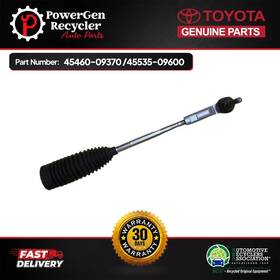
( Manufacturer Part Number: 45460-09370 ), ( Type: Tie Rod End ), ( Placement On Vehicle: Front, Right ), ( Partout Id: A-127649419 )
Review TOYOTA Gear Rack And Pinion Inner Outer Tie Rod Oem fits HIGHLANDER 2024
The **Toyota 45460-09370 2024 Highlander Suspension Tie Rod Assembly** is a precision-engineered component designed to ensure optimal steering performance, stability, and safety in Toyota s latest generation of the popular Highlander SUV. This high-quality, OE (Original Equipment) replacement part is meticulously crafted to match the exact specifications of the factory-installed tie rod system, featuring a robust **inner tie rod, outer tie rod, and pinion assembly** integrated into a single, seamless unit. Built with Toyota s stringent quality standards, this assembly incorporates durable **galvanized steel construction** for corrosion resistance, ensuring longevity even in harsh driving conditions, from snowy mountain passes to salt-laden coastal highways. The **precision-machined threads and bushings** guarantee smooth, responsive steering with minimal play, reducing wear on the steering rack and enhancing overall handling precision. Whether replacing a worn-out component due to age, damage, or routine maintenance, this tie rod assembly is engineered to restore the Highlander s factory-level performance, delivering the same level of reliability and accuracy that Toyota drivers expect. Ideal for both professional mechanics and DIY enthusiasts, this part is a direct-fit solution that maintains alignment integrity, prevents excessive wear on suspension components, and contributes to a safer, more controlled driving experience.
Buying the **Toyota 45460-09370 (2024 Highlander gear rack, pinion, inner, and outer tie rod assembly)** as a complete set has both advantages and disadvantages depending on your needs, budget, and mechanical experience. Below is a detailed breakdown:
### **Pros of buying a Complete Set**
1. **Convenience and Time-Saving** Purchasing the full assembly eliminates the need to source individual parts (gear rack, pinion, tie rods, and mounting hardware) separately. This reduces research time and ensures compatibility, as all components are designed to work together as a unit.
2. **Guaranteed Compatibility** Toyota s OEM parts are engineered to fit the 2024 Highlander s steering system perfectly. Mixing aftermarket or mismatched parts could lead to binding, uneven wear, or premature failure.
3. **Warranty and Quality Assurance** Toyota parts come with a manufacturer s warranty (typically 12 24 months), providing peace of mind against defects. Aftermarket alternatives may lack this protection and could vary in build quality.
4. **Simplified Installation** Since the assembly includes the gear rack, pinion, and tie rods pre-paired, alignment and adjustment are often easier compared to assembling components individually. This is particularly useful for DIYers without advanced mechanical knowledge.
5. **Reduced Risk of Cross-Threading or Misalignment** When installing individual parts, there s a higher chance of errors like incorrect torque values or improper alignment, which can damage the steering system. A complete set minimizes these risks.
6. **Access to Original Specifications** The OEM assembly adheres to Toyota s exact tolerances, ensuring proper steering feel, responsiveness, and longevity. Aftermarket parts may sacrifice precision for cost savings.
7. **Avoiding Counterfeit or Low-Quality Parts** Buying from authorized dealers or Toyota-certified suppliers reduces the risk of receiving substandard or fake parts, which can compromise safety and performance.
---
### **Cons of buying a Complete Set**
1. **Higher Cost** A full OEM assembly will be significantly more expensive than purchasing individual parts (e.g., just the gear rack or tie rods) from aftermarket suppliers. For example, the 45460-09370 set may cost **$800 $1,500 **, whereas aftermarket alternatives could range from **$300 $600** for comparable components.
2. **Overkill for Minor Issues** If only one part (e.g., a worn tie rod or pinion bearing) is failing, replacing the entire assembly may be unnecessary. In such cases, buying only the defective part could save money and reduce waste.
3. **Longer Lead Times** OEM parts, especially for newer models like the 2024 Highlander, may have limited stock or require longer shipping times compared to aftermarket parts, which are often held in inventory by multiple suppliers.
4. **Potential for Unnecessary Replacement** If the failure is isolated (e.g., a seized pinion bearing but otherwise healthy gear rack), replacing the entire assembly might be excessive. A mechanic may recommend inspecting each component individually before committing to a full swap.
5. **Resale Value Impact** If you plan to sell the vehicle later, installing OEM parts may not provide a significant advantage over aftermarket equivalents, especially if the parts are hidden (e.g., under the hood). Buyers typically focus on visible or performance-related upgrades.
6. **Labor Costs** While the assembly simplifies installation, some mechanics may charge extra for handling a full steering system replacement due to the complexity. DIYers should ensure they have the tools and confidence to complete the job safely.
7. **Environmental Concerns** Replacing a fully functional assembly with a new one contributes to electronic waste. If only one part is faulty, opting for a partial replacement could be a more sustainable choice.
---
### **When to Buy the Complete Set**
- You re performing a **full steering system overhaul** (e.g., after an accident or severe wear).
- You lack confidence in **selecting compatible aftermarket parts** or diagnosing individual failures.
- You want **maximum reliability and warranty coverage** for a critical safety component.
- You re replacing parts due to **manufacturer recall or extended warranty requirements**.
- You re a **DIYer who values convenience** over cost savings and wants to avoid potential mismatches.
### **When to Avoid Buying the Complete Set**
- Only **one part (e.g., tie rod or pinion bearing) is confirmed faulty** after inspection.
- You re on a **tight budget** and can source high-quality aftermarket alternatives (e.g., from **Dorman, ACDelco, or Mopar** for similar reliability).
- You have **mechanical experience** and prefer to **replace only what s broken**.
- The vehicle is **not yours long-term**, and you d rather avoid unnecessary expenses.
- You can find the **same assembly at a lower price** from a **Toyota dealer with discounts** or a **reputable used parts lot**.
---
### **Recommendation**
**Buy the complete 45460-09370 assembly if:**- You re replacing the entire steering system due to **age, wear, or a major failure** (e.g., cracked gear rack, seized pinion).
- You prioritize **ease of installation and warranty protection** over cost.
- You re unsure whether other components are compromised and want a **fresh, matched set**.
**Avoid buying the complete set if:**- Only **one or two parts are confirmed defective** after a professional inspection.
- You re willing to **research and purchase high-quality aftermarket parts** (e.g., **Dorman 95000, ACDelco 12T1000, or Mopar 51000**) for significant savings.
- You re a **savvy DIYer** who can **diagnose and replace parts individually** with proper tools.
#### **Alternative Approach:**1. **Get a Professional Inspection** Have a trusted mechanic diagnose the exact issue (e.g., worn tie rods, pinion bearing, or gear rack wear). This prevents over-replacement.
2. **Compare Prices** Check **Toyota dealers, RockAuto, Amazon, and specialty suppliers** (e.g., **SteeringSystems.com**) for the best deal on the full assembly or individual parts.
3. **Consider Remanufactured Parts** If budget is a concern, **remanufactured gear racks or pinions** (from **SteeringSystems, GenuineParts.com, or local remanufacturers**) can offer **OEM-quality at a fraction of the cost**.
4. **Check for Discounts** Some dealers offer **warranty trade-ins or rebates** for older parts, reducing the net cost.
#### **Final Verdict:**For **most consumers replacing a failing steering system**, the **45460-09370 OEM assembly is the safest and most convenient choice**, especially if you lack mechanical expertise or want to avoid future compatibility issues. However, if you re **certain only one part is bad** and comfortable with aftermarket alternatives, purchasing individual components (or a remanufactured gear rack) can be a **cost-effective and environmentally friendly** option.
**Best for most people:** **Buy the complete OEM set** for reliability and peace of mind.
**Best for budget-conscious DIYers:** **Inspect first, then buy only what s needed** (aftermarket or remanufactured).
Details:
This part is in good condition and would make a replacement for your damaged, broken, or bad. American Express, Discover.
part #: 4546009370 prices
- $160.00-$199.00
specifications tirolik:
- for models: Highlander
- for makes: Toyota
- for years: 2024
- mpn: 45460-09370
- type: Tie Rod End
- placement on vehicle: Front, Right
- partout id: A-127649419
offer tirolik:
- sold: 0
- availability: In Stock
- options: Ship-to-home
- started: May 14, 2026
- quantity: 1
payments tirolik:
- other
- wallet: Google-pay
- credit card: Diners-club
seller tirolik:
- # reviews: 536
- city: Houston, Texas
- rating: 99.6%
general tirolik:
- condition: Used
- Car Truck Parts Accessories > Steering Suspension > Tie Rods Steering Linkages
returns tirolik:
- paid by: Seller
- time: 30 Days
- policy: Returns Accepted
shipping tirolik:
- service: UPS Ground
- carrier: UPS
- cost: $0.00
- type: Fixed
- class: Standard
- transit: 2-6 Days
Toyota 45460-09370 Is Similar To:
- Es2508l Toyota Fits Trw Front Outer Tie Rod End (44.1% similar) Please refer to pictures for item condition...(August 5th, 2018)
- 101-1766 Steering Tie Rod End Front Left Fits Toyota Land Cruiser (23.6% similar) New fits toyota land cruiser 68-83...(July 16th, 2018)
- 101-3688 Beck Arnley Front Inner Steering Tie Rod End Toyota Camry (45.5% similar) Please through for any questions. No matter what says. None of which makes the part defective. Beck anally part number rubber parts, gaskets, hardware may need to be replaced and not usable. They may have been in storage anywhere from 1-30 years. There may be minor corrosion, scuffs, torn or missing...(April 8th, 2018)
- 101-3969 Steering Tie Rod End Toyota Corolla (26% similar) Tie rod end configuration straight type female this product ships directly from the manufacturer. Buyer pays return shipping. Erasable no quantity sold individually. Fitment information may not be available for all products and those without will have a compatibility link...(August 10th, 2018)
- 101-4009 Steering Tie Rod End Toyota Fap (28.6% similar) Applications are for many different 1986 through 1998 toyota Tacoma, 4-RUNNER and T-100 pick-up truck model vehicles shown by year detail in the catalog above. Please study photos very carefully. Related parts are, 68748 and free trial. This offer listing is for one 1 only, a good new old stock ...(August 18th, 2018)
- 101-4226 Beck Arnley Front Inner Tie Rod End Toyota 049797341781 (39.2% similar) There may be minor corrosion, scuffs, torn or missing boxes, scratches from storage, etc. Once purchased you own it. None of which makes the part defective. If any manufacturer warranty exists, it is between you and them. Sometimes the fitment is so old that it does not take into account trim, ...(May 28th, 2018)
- 101-4463 Steering Tie Rod End Assembly Front Outer Fits Toyota (27% similar) ...(October 1st, 2018)
- 101-4974 Steering Tie Rod End Fits Toyota Fj Cruiser (29% similar) Car quest red chassis Canada, Deena, Delphi, Murdoch LP, Moog, NASCAR advantage, imparts automotive, parts master chassis, Pb pro steer quick steer, rare inc. Steering tie rod end fits toyota 4RUNNER DJ cruiser beck Enterprise is for 1 - adjust qty as needed...(June 10th, 2018)
- 101-5314 Steering Tie Rod End For Toyota Sienna 049797777832 (25.9% similar) This e-mail is constantly monitored so you can be sure your questions will answered promptly and courteously. Shipping costs are based on the method that you choose. 25NUMBER of pieces: 1UPC: 2 beck anally is a leading specialty provider premium parts for cars, light trucks, and Suva...(April 3rd, 2018)
- 101-7867 Steering Tie Rod End Front Inner Fits Toyota Highlander (23.8% similar) Check fitment notes. This part fits vehicles made in the following years 2008 , 2009 , 2010 , 2011 , 2012 , 2013 , 2014 , 2015 . Disclosure: photos do not represent actual part. Stock photos only. V6 gas naturally aspirated. The items should be send with all original packaging, paperwork and...(March 7th, 2018)
- 105-10052 Proforged Tie Rod Adjusting Sleeve Fits Toyota 849180020206 (25.7% similar) Pro forged tie rod adjusting sleeve fits toyota 4RUNNER compatible with...(November 13th, 2018)