PLYMOUTH MOPAR 693455 Tie Rod Body Nos
fits make: Plymouth. year: 1939.
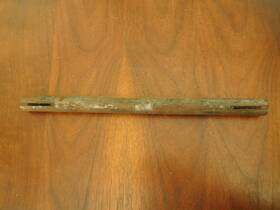
( Brand: Plymouth Mopar ), ( Manufacturer Part Number: 693455 ), ( Type: Tie Rod Body ), ( Vintage Part: Yes ), ( Universal Fitment: No ), ( Country Of Origin: United States )
Review PLYMOUTH MOPAR Tie Rod Body Short Nos fits 1939
The **Plymouth Mopar 693455 Tie Rod Body (No-Sag) for 1939 Models** is a meticulously engineered, high-performance suspension component designed to restore and enhance the handling, alignment, and overall driving dynamics of classic 1939 Plymouth vehicles. Crafted from durable, corrosion-resistant materials, this tie rod body is engineered to eliminate the sagging and slop commonly associated with aging suspension systems, ensuring a tighter, more responsive steering feel that brings out the true character of these iconic automobiles. The No-Sag design incorporates precision-machined internal components and reinforced construction, allowing for optimal load-bearing capacity while maintaining smooth, consistent movement throughout the steering linkage. Whether you're preparing your 1939 Plymouth for a weekend cruise, a show event, or a spirited drive down a winding road, this tie rod body delivers the rigidity and precision needed to keep the wheels aligned and the ride stable. Built to exacting specifications, it seamlessly integrates with the existing suspension setup, offering a direct replacement that requires minimal adjustment and no compromises on performance. For enthusiasts seeking to preserve the integrity of their classic ride while upgrading its functionality, the **693455 Tie Rod Body** is an essential upgrade that bridges the gap between vintage charm and modern-day reliability.
### **Pros and Cons of Buying a 1939 Plymouth Tie Rod Body (Part No. 693455)**
#### **Pros**
1. **Classic American Muscle Car Heritage** The 1939 Plymouth is a rare and historically significant vehicle, embodying early American automotive design. Owning one places you in a small but passionate community of enthusiasts who appreciate vintage automobiles.
2. **Potential for Restoration and Customization** The car s simple, pre-war mechanics make it a rewarding project for DIY mechanics. The tie rod body style (without a full frame) allows for creative modifications, such as modern suspension upgrades, custom paint, or even conversion into a hot rod.
3. **Lower Running Costs (Compared to Modern Cars)** Since the car is not intended for daily driving, fuel, insurance, and maintenance costs are minimal. Parts are often inexpensive, especially if sourced from junkyards or aftermarket suppliers.
4. **Collectible Value** Well-preserved 1939 Plymouths are sought after by collectors, particularly those in original condition or with documented histories. Restored examples can appreciate in value over time, especially if they are rare variants like the tie rod body.
5. **Driving Experience** For enthusiasts who enjoy the feel of a vintage car, the 1939 Plymouth offers a different driving experience compared to modern vehicles. Its lightweight construction and simple mechanical design can be fun to work with and drive on weekends.
6. **Community and Events** Owning a classic car opens doors to car shows, cruises, and meetups where you can connect with like-minded individuals. Many enthusiasts enjoy the camaraderie and shared passion for preserving automotive history.
7. **Potential for Parts Donation** If the car is beyond restoration, its parts can be salvaged and sold or donated to other projects, providing a secondary benefit.
---
#### **Cons**
1. **High Maintenance and Reliability Issues** Pre-war cars are not built for modern conditions. Rust, worn-out suspension, outdated electrical systems, and outdated fuel injection (if any) can make them unreliable. Regular maintenance is required to keep it running, and parts may be hard to find.
2. **Limited Modern Comforts** The car lacks modern safety features (airbags, ABS, modern seatbelts), comforts (power steering, air conditioning, modern sound insulation), and convenience (electric windows, cruise control). Driving it long distances or in harsh weather can be uncomfortable.
3. **Fuel Efficiency and Performance** The 1939 Plymouth likely uses a carbureted engine (possibly a flathead inline-six or inline-eight) that is inefficient by today s standards. Fuel economy will be poor, and acceleration may feel sluggish compared to modern cars.
4. **Insurance Challenges** Insuring a classic car can be expensive, especially if it is not fully restored or lacks proper documentation. Some insurers may classify it as a "project car," leading to higher premiums or difficulty finding coverage.
5. **Driving Restrictions** Depending on local regulations, the car may not meet modern emissions standards, roadworthiness requirements, or safety inspections. Some areas require special permits for vintage cars, adding administrative hassle.
6. **Time and Skill Intensive** Restoring or even maintaining a 1939 Plymouth requires mechanical knowledge, patience, and time. If you lack experience with vintage cars, the project could become overwhelming or costly if you need to hire professionals.
7. **Depreciation Risk** Unlike modern cars, classic cars do not hold value consistently. If the market for 1939 Plymouths declines or if the car is not restored to concours-level condition, it may depreciate rather than appreciate.
8. **Limited Practicality** The car is not suitable for daily use due to its age, lack of modern features, and reliability concerns. It is best suited for weekend driving, shows, or as a hobby project.
---
### **Conclusion**
Buying a 1939 Plymouth Tie Rod Body (Part No. 693455) is a significant investment in a piece of automotive history. It offers the thrill of owning a rare classic car, the satisfaction of restoration work, and the joy of driving a vehicle from an era when cars were simpler and more personal. However, it also comes with substantial challenges, including high maintenance costs, reliability issues, and the need for specialized knowledge.
This car is ideal for someone who:- Has a passion for vintage automobiles and is willing to invest time and effort into its upkeep.
- Enjoys mechanical work and restoration projects.
- Values the historical and aesthetic appeal of pre-war American cars over modern convenience.
- Plans to use the car primarily for shows, cruises, or occasional driving rather than daily use.
For those who are not prepared for the challenges, a modern classic (e.g., a restored Mustang or Camaro) or a more reliable vintage car (e.g., a 1950s Ford or Chevy) might be a better choice.
### **Recommendation**
If you are committed to the project and have the resources (time, money, and mechanical skills), purchasing a 1939 Plymouth Tie Rod Body can be a deeply rewarding experience. Start by thoroughly inspecting the car for rust, structural integrity, and mechanical condition. Consider consulting with a classic car restoration expert to assess its viability. If you decide to proceed, prioritize preserving its originality while making necessary repairs to ensure it remains a safe and enjoyable vehicle.
For beginners, it may be wise to start with a more accessible vintage car or a less rare Plymouth model before tackling the 1939 tie rod body. Ultimately, the decision should align with your goals, budget, and willingness to embrace the challenges of owning a piece of automotive history.
Details:
Shed Box #5 KDCKCC.
part #: 693455 price
- $49.00
specifications tirolik:
- for makes: Plymouth
- for years: 1939
- brand: Plymouth Mopar
- mpn: 693455
- type: Tie Rod Body
- vintage part: Yes
- universal fitment: No
- country of origin: United States
returns tirolik:
- paid by: Buyer
- time: 30 Days
- policy: Returns Accepted
offer tirolik:
- started: February 5, 2026
- sold: 0
- quantity: 1
- availability: In Stock
- options: Ship-to-home
seller tirolik:
- rating: 99.8%
- city: Denver, Colorado
- # reviews: 7414
payments tirolik:
- credit card: Visa
- other
- wallet: Apple-pay
shipping tirolik:
- service: USPS Ground Advantage, USPS Priority Mail
- type: Calculated
- cost: $13.05
- carrier: USPS
- class: Standard, Expedited
- transit: 4-7 Days
general tirolik:
- Car Truck Parts Accessories > Steering Suspension > Tie Rods Steering Linkages
- condition: Used
Plymouth Mopar 693455 Is Similar To:
- Cl-1038s Steering Tie Rod Adjusting Sleeves Dodge Plymouth Van New Pair (31.7% similar) Restore maximum handling control with our precision engineered tie rod sleeves and fix that loose steering today. Rebuild the steering system with these new adjusting sleeves and you'll be surprised delighted at how well your old vehicle drives handles road. Up for sale is a pair of 2 tie rod ...(February 28th, 2018)
- Es2095r Moog Tie Rod End Fits Dodge Vans Plymouth Pb (31.7% similar) ...(April 11th, 2018)
- Es401r Chrysler Front Outer Tie Rod End Fits Dodge Plymouth (31.5% similar) Perfect circle front outer tie rod end ES401R fits Chrysler, dodge, Plymouth H125 lookup part no. Please refer to pictures for item condition. May not fit all vehicles within stated year range, due to possible variations...(June 21st, 2018)
- Mes352r Mevotech Steering Tie Rod End Fits Plymouth Gran 669719314350 (28.8% similar) This parts position is front outer, right outer. Rabbets chassis, xref part numbers: 25458, 401-1047B, 45A0047, 612. X13: over-built with sauntered metal-to-metal technology for added endurance and durability. T9: added labor saver feature: save time and money with bundled hardware. This part fits ...(March 27th, 2018)
- Mes393r Mevotech Steering Tie Rod End Fits Plymouth Trailduster 669719314411 (25.6% similar) ...(September 29th, 2018)
- Buyautoparts 89-20171k7 For Plymouth Neon 2001 Power Steering Rack And Outer Tie Rod Kit Csw (35.5% similar) This rack and pinion outer tie rod kit is manufactured tested to the strictest OE car truck standards for unparalleled performance. Fits the following: year: make: model: details: 2001 PLYMOUTHNEONW/ power steering - automatic transmission 4 speed w/ firm feel Sb, standard SBA. Basically, your ...(February 14th, 2024)
- Buyautoparts 89-20162k7 Power Steering Rack And Outer Tie Rod Kit For Plymouth Neon 2000 (32.1% similar) Tested and approved: each part is run through rigorous testing before it leaves the factory. power steering rack and outer tie rod kit for Plymouth neon 2000 : easy install: oem fit finish for easy installation. Premium parts: all parts are premium ISO/ts 16949 quality. Condition: refurbished. ...(April 21st, 2024)
- Jeep plymouth Truck 68522994aa 20 Gladiator Tie Rod Bar (48.1% similar) Parts are sold strictly as replacement parts only. N new part manufactured from scratch. No expedited shipping is available...(August 8th, 2024)
- Buyautoparts 89-20266k7 For Dodge Plymouth Neon Power Steering Rack And Outer Tie Rod Kit (33.3% similar) Built for trouble-free ownership and 100% visually inspected quality tested, this rack pinion outer tie rod kit is backed by our satisfaction guarantee. Condition: refurbished. WARRANTY:3 year. Premium parts: all parts are premium ISO/ts 16949 quality. Brand:. Part NUMBER:89-20266K7. This rack and ...(September 27th, 2024)
- Buyautoparts 89-20066k7 For Dodge Aries Plymouth Caravelle Power Steering Rack And Outer Tie Rod Kit Csw (32.7% similar) Built for trouble-free ownership and 100% visually inspected quality tested, this rack pinion outer tie rod kit is backed by our satisfaction guarantee. Technical specifications: part type:rack and pinion outer tie rod kit. WARRANTY:3 year. Brand:. Condition: refurbished. Part NUMBER:89-20066K7. ...(October 5th, 2024)
- Buyautoparts 89-20170k7 For Plymouth Neon 2001 Power Steering Rack And Outer Tie Rod Kit Gap (34% similar) Brand:. Part NUMBER:89-20170K7. Built for trouble-free ownership and 100% visually inspected quality tested, this rack pinion outer tie rod kit is backed by our satisfaction guarantee. This rack and pinion outer tie rod kit is manufactured tested to the strictest OE car truck standards for ...(November 6th, 2024)