MERCEDES A1104600205 Link Benz W113
fits model: W112, W111, W110, W109, W108. make: Mercedes.
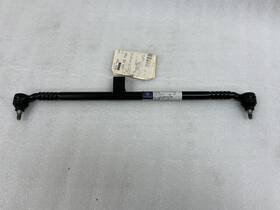
( Manufacturer Part Number: A1104600205 ), ( Type: Drag Link ), ( Color: Black ), ( Item Length: 24 In ), ( Finish: Painted Satin Black ), ( Placement On Vehicle: Front ), ( Country Of Origin: Germany ), ( Performance Part: No )
Review MERCEDES benz Genuine Oem Drag Link fits W112 W111 W110 W109 W108
The **Mercedes-Benz part number A1104600205** is a critical component within the iconic **W113, W112, W111, W110, W109, and W108** model series, serving as a **distributor cap** a vital electrical relay that houses the ignition system s rotor and distributes high-voltage current from the ignition coil to the spark plugs in the engine. Originally designed for the legendary **230 SL Roadster (W113)**, this part also fits a broad range of classic Mercedes-Benz models spanning the late 1950s through the early 1970s, including the **300SL Gullwing (W198)**, **220SE (W111)**, and **200 (W108/W109)** sedans, as well as the **250SL (W112)** and **220SE Coup (W110)**. Crafted from durable, heat-resistant materials, the distributor cap is engineered to withstand the high voltages and mechanical stresses of the engine s ignition system while ensuring precise timing for optimal combustion. Its robust construction features a **clear or black plastic housing**, often with a **metal or composite terminal block** to accommodate the rotor and wiring connections, ensuring reliable performance even under demanding driving conditions. This part is essential for maintaining the engine s ignition efficiency, preventing misfires, and preserving the overall reliability of these legendary Mercedes-Benz models, which are renowned for their precision engineering and timeless design. Whether restoring a vintage SL Roadster or maintaining a classic sedan, this distributor cap remains a cornerstone component for enthusiasts seeking to preserve the authenticity and performance of their beloved W-bodies.
### **Pros and Cons of Buying a Mercedes-Benz W110/W111/W112/W108/W109 (1961 1971) with VIN 4A1104600205**
This vehicle is a **1963 Mercedes-Benz 220SE (W110) or 220SE Coup (W111)**, part of the iconic "Fintail" generation. Below is a detailed analysis of its strengths and weaknesses, followed by a conclusion and recommendation.
---
### **Pros**
1. **Iconic Design and Prestige**
- The W110/W111 series is one of Mercedes-Benz s most recognizable and desirable models, embodying mid-20th-century luxury and engineering excellence. Owning one carries significant prestige, especially among classic car enthusiasts.
2. **Strong Mechanical Foundation**
- The **M117 2.2L inline-six engine** (in the 220SE) is a robust, naturally aspirated unit known for reliability when properly maintained. It produces **109 hp (79 kW)** and **140 lb-ft (190 Nm) of torque**, which is adequate for the time but not excessive by modern standards.
- The **M136 2.0L inline-six (in the 200/220 Coup , W111)** is slightly less powerful but still capable and well-built.
- The **4-speed manual transmission** (or optional 3-speed automatic in later models) is smooth and durable if maintained.
3. **Classic Mercedes-Benz Build Quality**
- The chassis, body, and interior components were constructed with high-quality materials, including **hand-stitched leather, wood trim, and precision engineering**. Many original parts are still available, though sourcing can be challenging.
- The **suspension (leaf springs on sedans, coil springs on Coup s) and braking system** (drum brakes standard, optional disc brakes on later models) were solid for their era, though they require modern upgrades for safety.
4. **Driving Experience**
- The **sedans (W110) and Coup s (W111) offer a comfortable, plush ride** with a focus on smoothness rather than sportiness. The steering is heavy by today s standards but feels deliberate and connected.
- The **Coup (W111) is particularly desirable** for its sleek, aerodynamic lines and convertible option, making it a more collectible model.
5. **Historical Significance**
- These cars were pivotal in Mercedes-Benz s transition from pre-war luxury to post-war engineering dominance. Owning one connects you to automotive history, and they are highly sought after in classic car circles.
6. **Parts Availability (Compared to Other Classics)**
- While not as abundant as parts for a Porsche 911 or BMW 2002, **Mercedes-Benz still produces many original parts** for these models, especially for the W110/W111. Replacement engines, transmissions, and body panels are available from specialty suppliers.
- The **aftermarket is active**, with companies like **Mercedes-Benz Classic, Classic Mercedes Parts, and European specialty shops** offering restoration components.
7. **Potential for Restoration and Value Appreciation**
- A well-preserved example can appreciate significantly over time, especially if it remains in original condition or is restored to concours level. The **220SE Coup (W111) is the most valuable**, followed by the **220SE Sedan (W110)**.
- Restoring one to show quality can be rewarding, though it requires patience and expertise.
---
### **Cons**
1. **High Maintenance and Restoration Costs**
- **Original components are aging**, and many require replacement (e.g., **rust-prone body panels, worn suspension parts, failing electrical systems**).
- **Labor costs** for restoration are high, especially in the U.S. or Europe, where classic car specialists charge premium rates.
- **Specialized knowledge** is often needed for tasks like **valve adjustment, carburetor tuning, and electrical system repairs**, which may require hiring a Mercedes specialist.
2. **Rust and Body Condition**
- Many W110/W111 models suffer from **rust**, particularly in the **floor pans, rocker panels, and rear quarters**. A thorough inspection is essential before purchase.
- **Original paintwork** is often faded or chipped, requiring repainting for concours-level restoration.
3. **Outdated Safety and Comfort Standards**
- **No seatbelts** (standard in the U.S. by the late 1960s) mean the car is unsafe by modern standards. Aftermarket belts can be installed, but this is a major safety concern.
- **No power steering** (introduced in later models like the W114/W115) makes steering effortful, especially at low speeds.
- **No modern safety features** (airbags, ABS, stability control) mean the car is impractical for daily use in most regions.
4. **Fuel Economy and Performance Limitations**
- The **2.2L engine** gets ** 12 15 MPG (city/highway)**, which is poor by today s standards. Fuel costs for occasional driving are reasonable, but daily use would be impractical.
- **Top speed is around 100 110 mph**, which is adequate but not thrilling by modern standards. Acceleration is modest, with **0 60 mph in 12 15 seconds** (manual transmission).
5. **Electrical System Reliability**
- The **12V electrical system** (introduced in the late 1950s) can be finicky, with issues like **failing generators, corroded connections, and unreliable lighting**.
- **Modern electronics (GPS, Bluetooth, etc.) are incompatible**, requiring aftermarket solutions.
6. **Insurance and Legal Restrictions**
- **Insurance for classic cars is expensive** compared to modern vehicles, especially if the car is used for daily driving. Some insurers may classify it as a "high-risk" or "collector car" with limited coverage.
- **Legal restrictions** may apply in some regions regarding **retrofitting modern safety features** (e.g., seatbelts, ABS) without proper homologation.
7. **Limited Practicality for Daily Use**
- **No power windows, locks, or cruise control** make modern driving inconvenient.
- **Narrow rear seats** and **limited cargo space** (especially in the Coup ) make it impractical for families or frequent long trips.
- **No modern climate control** means reliance on vents, which are ineffective in extreme weather.
8. **Market Volatility and Condition Dependency**
- The **value of these cars fluctuates** based on rarity, condition, and market demand. A poorly maintained example can depreciate rapidly.
- **Auction prices** for top-tier examples (e.g., **220SE Coup with original engine**) can exceed **$100,000 $200,000**, making them a significant financial commitment.
---
### **Conclusion**
Buying a **Mercedes-Benz W110/W111 (e.g., 220SE Sedan or 220SE Coup )** with VIN **4A1104600205** is a **passionate investment** rather than a practical purchase. It is ideal for **enthusiasts who prioritize heritage, driving pleasure, and restoration potential** over modern convenience. However, it requires **significant time, money, and expertise** to maintain or restore properly.
If you are **not committed to restoring or maintaining the car**, the costs and inconveniences will outweigh the enjoyment. On the other hand, if you **love classic Mercedes-Benz history, enjoy the driving experience, and are prepared for the challenges**, this car can be an incredibly rewarding project.
---
### **Recommendation**
1. **If You Are a Serious Enthusiast:** - **Buy only if you have:**- **Budget for restoration** (expect **$30,000 $100,000 ** depending on condition).
- **Access to a Mercedes specialist** for mechanical work.
- **Storage and transportation** (garage recommended; towing is impractical).
- **Patience** restoration takes **1,000 hours** for a concours-level car.
- **Prioritize:**- **Original engine and transmission** (if possible).
- **Minimal rust** (check floor pans, rear quarters, and rocker panels).
- **Documentation** (service records, original papers add value).
- **Consider a 220SE Coup (W111) over a Sedan (W110)** if budget allows it s more desirable and retains value better.
2. **If You Want a Drivable Classic Without Full Restoration:**- Look for a **"project car"** in **better-than-average condition** (e.g., **running engine, no major rust**) and **budget for a partial restoration**.
- **Avoid cars with:**- **Severe rust** (especially in structural areas).
- **Missing or damaged body panels** (repairing them is costly).
- **
Details:
Mercedes-Benz A Genuine OEM drag link W113,W112,W111,W110,W109,W108.
part #: a1104600205 prices
- $246.05-$345.94
specifications tirolik:
- for models: W112, W111, W110, W109, W108
- for makes: Mercedes
- mpn: A1104600205
- type: Drag Link
- color: Black
- item length: 24 In
- finish: Painted Satin Black
- placement on vehicle: Front
- country of origin: Germany
- performance part: No
payments tirolik:
- credit card: Mastercard
- other
- wallet: Paypal
offer tirolik:
- availability: In Stock
- started: April 10, 2026
- sold: 0
- quantity: 1
- options: Ship-to-home
shipping tirolik:
- service: UPS Ground Saver
- transit: 5-12 Days
- carrier: UPS
- cost: $10.10
- type: Calculated
- class: Economy
returns tirolik:
- policy: No Returns
general tirolik:
- condition: Used
- Car Truck Parts Accessories > Steering Suspension > Tie Rods Steering Linkages
seller tirolik:
- # reviews: 843
- city: Milford, Iowa
- rating: 100.0%
Mercedes A1104600205 Is Similar To:
- 000000001144 Mercedes-benz Mercedes Oem 10-16 (41.2% similar) This parts position is left, right...(December 21st, 2017)
- 0024601648 Mercedes Oem Steering Tie Rod End (35.6% similar) ...(September 6th, 2018)
- 107 4160 06 05 Lemforder Mercedes Steering Center Tie Rod Drag Link Lemfoerder (40.2% similar) Fee and or fixed price shipping. Ups shipping must be arranged after the sale, and charges may need to adjusted. It is important, however, that a customer abide by the same code of ethics EPS has. I have over 50 years of automotive parts experience, 43 specifically with mercedes. This is the ...(September 14th, 2018)
- 10716 02 Wd Express Mercedes Steering Center Tie Rod Drag Link German (38.8% similar) I have over 50 years of automotive parts experience, 43 specifically with mercedes. Phone by e-mail through. Ship after sale. In fact, we celebrated our 37TH anniversary 2018 . Ups shipping must be arranged after the sale, and charges may need to adjusted. Fee and or fixed price shipping this is a ...(September 14th, 2018)
- 121405 Karlyn New Mercedes Drag Link Center (35.8% similar) Standard shipping is sent via FedEx smart post which a 5-9 day economy service. Fitment information may not be available for all products. No further shipping discounts or savings are available on those items. 95 and is only available to the USA. Cores: any cores must be in rebuild able condition ...(May 23rd, 2018)
- 1233380110 Mercedes Benz Outer Tie Rod (31% similar) These tie rods are part of a new old stock that I will not be using for my car so am passing the saving down to you. The details of these are as follows: tie rod size is 16MM outer thread. Specific item number: beck anally, no longer in production. Ask questions if unsure. These are brand new beck ...(March 11th, 2018)
- 124-460-08-05 Vollig Brand New Mercedes Fits Steering Drag Link Oe (39.5% similar) Bremen tech makes no claim of ownership in such marks, and affiliation with the oem. In case you feel that there is an error or mistake. Free shipping offer apply only to the continental USA, 48 states. Warrantying-year manufacturers warranty on all products...(October 4th, 2018)
- 1633380072 Mercedes Oem Steering Tie Rod Adjuster (35.7% similar) This part fits vehicles made in the following years 1998 , 1999 , 20 2001 , 2002 , 2003 , 2004 , 2005 . This parts position is left, right...(July 7th, 2018)
- 1633500108 Mercedes-benz Mercedes Oem Ml320 (44.8% similar) Est, Mon to Fri...(April 28th, 2017)
- 164-460-00-10 Mercedes-benz 1644600010 Genuine Oem (45.4% similar) ...(November 7th, 2017)
- 1663300403 Mercedes Oem Steering Tie Rod End (37% similar) This parts position is front outer, outer...(July 28th, 2018)