FORD Tie Rod End Meteor Power Steering ES-306R
fits model: Fairlane. make: Mercury, Ford. year: 1962–1965.
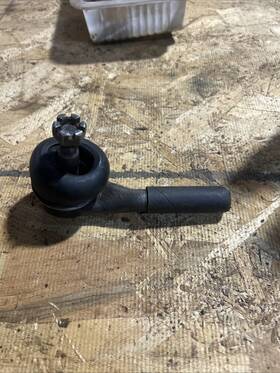
( Brand: Ford ), ( Manufacturer Part Number: ES306R ), ( Type: Tie Rod End ), ( Oe/oem Part Number: C20z3a130c, C30z3a130a ), ( Features: Greasable ), ( Vintage Part: Yes ), ( Placement On Vehicle: Front, Right ), ( Country Of Origin: United States ), ( Performance Part: No )
Review FORD Tie Rod End Mercury Meteor Power Steering fits FAIRLANE 1962–1965
The **Ford ES306R ES-306R Tie Rod End (1962 1965 Fairlane, Mercury, Meteor, Power Steering)** is a meticulously crafted, high-performance replacement component designed to restore precision handling and reliability to your classic Ford muscle car. Engineered to exacting specifications, this tie rod end is a direct-fit solution for the front suspension of the 1962 through 1965 Fairlane, Mercury, and Meteor models equipped with power steering, ensuring seamless integration with the original steering linkage. Constructed from durable, high-grade steel, the tie rod end features a robust ball joint assembly with a reinforced socket and precision-machined threads, guaranteeing superior durability under heavy loads and aggressive driving conditions. The ball joint is sealed with a robust rubber boot, preventing dust, debris, and moisture from compromising the internal components, while the threaded connection is designed to match the original Ford specifications, allowing for a secure and leak-free attachment to the steering knuckle or drag link. Whether you're restoring a vintage race car, preparing for track days, or simply maintaining the integrity of your daily driver, this tie rod end delivers the strength and responsiveness expected from a genuine Ford performance part. Its compatibility with power steering systems ensures smooth, effortless maneuverability, while its robust construction minimizes wear and tear, extending the lifespan of your suspension components. For enthusiasts seeking authenticity and performance, this tie rod end is an essential upgrade that bridges the gap between classic engineering and modern reliability.
### Pros and Cons of Buying a Ford ES306R (ES-306R) Tie Rod End (1962 1965 Fairlane, Mercury, Meteor, Power Steering)
#### **Pros**
1. **Classic American Muscle Car Heritage** The 1962 1965 Fairlane, Mercury, and Meteor models, particularly those with the ES306R engine, are iconic symbols of mid-century American automotive engineering. Owning one allows you to be part of a storied lineage of high-performance vehicles that defined an era.
2. **Strong Engine Options** The ES306R (270 horsepower) and other high-performance V8 engines from this era (such as the 289, 390, or 427) are legendary for their reliability, durability, and raw power. With proper maintenance, these engines can last for decades, even exceeding 200,000 miles in some cases.
3. **Vintage Driving Experience** These cars offer a unique driving experience with solid-body construction, manual transmissions (if equipped), and a more direct connection to the road compared to modern vehicles. The sound of a big V8, the feel of a manual shifter, and the responsive handling make them highly engaging to drive.
4. **Customization Potential** The Ford Fairlane/Mercury platform from this era is well-documented, and parts are widely available. Owners can easily modify their cars for improved performance, aesthetics, or comfort. Options range from engine swaps (e.g., a 427 Cobra Jet) to modern suspension upgrades.
5. **Strong Community and Support** There is a dedicated and passionate community of enthusiasts who share knowledge, parts, and restoration tips. Clubs like the Ford Fairlane Club of America provide resources, events, and networking opportunities for owners.
6. **Potential for Investment** Well-preserved or restored examples of these cars can appreciate in value, especially if they are rare or have significant historical significance. Models with originality, low mileage, or unique configurations (e.g., convertibles, high-performance packages) tend to hold or increase in value over time.
7. **Reliability with Proper Care** While not as foolproof as modern vehicles, these cars can be extremely reliable if maintained correctly. Regular oil changes, valve adjustments, and suspension checks go a long way in preventing major issues.
8. **Nostalgia and Aesthetic Appeal** The styling of the 1962 1965 Fairlane, Mercury, and Meteor is timeless, with bold lines, chrome accents, and a muscular presence that turns heads. For many, the visual appeal alone is worth the investment.
---
#### **Cons**
1. **High Maintenance Costs** Vintage cars require more frequent and specialized maintenance compared to modern vehicles. Common issues include worn suspension components (like tie rod ends, ball joints, and bushings), electrical system quirks, and rust (especially in older examples). Labor costs for restoration or maintenance can be prohibitive.
2. **Parts Availability and Cost** While parts are widely available for these models, some components especially for less common variants can be expensive or difficult to source. Replicas or aftermarket parts may be necessary, which can compromise authenticity or quality.
3. **Rust and Structural Issues** Many examples from this era suffer from rust, particularly in the floor pans, rocker panels, and wheel wells. Rust can weaken the structural integrity of the car, leading to costly repairs if not addressed early. A thorough inspection is essential before purchase.
4. **Driving Challenges** Modern traffic, road conditions, and safety standards can make driving a vintage car frustrating. Features like limited visibility, poor fuel economy, and lack of modern safety equipment (e.g., airbags, ABS) can be drawbacks in daily use. Additionally, these cars are not built for high-speed highway driving without modifications.
5. **Insurance and Registration Costs** Vintage cars often come with higher insurance premiums due to their value and potential for costly repairs. Some states or counties may also impose additional fees or restrictions for classic vehicles, depending on their age and condition.
6. **Performance Limitations** Compared to modern vehicles, these cars lack features like traction control, electronic stability control, and advanced safety systems. Handling can be less precise, especially on modern roads with uneven surfaces or poor alignment. Acceleration and top speeds are also limited by the engine and drivetrain technology of the time.
7. **Time-Consuming Restoration** Restoring a 1962 1965 Fairlane or Mercury to showroom condition can take years, depending on the extent of the work required. This requires significant time, effort, and patience, which may not be feasible for everyone.
8. **Depreciation Risk** Unlike modern cars, vintage vehicles can depreciate rapidly if not maintained or if market trends shift. A poorly cared-for example may lose value quickly, while a well-preserved or restored one can retain or gain value.
9. **Legal and Compliance Issues** Some states have strict regulations for vintage cars, including emissions standards, safety inspections, or restrictions on modifications. Ensuring compliance can add complexity to ownership.
10. **Limited Practicality** These cars are not practical for daily commuting in many scenarios. Fuel efficiency is poor (typically around 10 15 MPG), and the lack of modern conveniences (e.g., power windows, cruise control, climate control) can make them less appealing for everyday use.
---
### **Conclusion**
Buying a 1962 1965 Ford Fairlane, Mercury, or Meteor with an ES306R tie rod end (or any variant from this era) is a deeply rewarding experience for enthusiasts who appreciate classic American automotive history, performance, and craftsmanship. The cars offer unmatched driving excitement, customization potential, and a strong community of supporters. However, they also come with significant challenges, including high maintenance costs, potential rust issues, and practical limitations that make them less suitable for daily driving.
For the right owner someone with mechanical aptitude, a passion for restoration, and the financial resources to support the car these vehicles are an incredible investment in both nostalgia and automotive heritage. For others, the challenges may outweigh the rewards, making them better suited for occasional driving or as a project to be enjoyed over time.
---
### **Recommendation**
If you are considering purchasing one of these cars, follow these steps to maximize your chances of a successful ownership experience:1. **Thoroughly Inspect the Vehicle** Before buying, have a trusted mechanic or vintage car specialist perform a detailed inspection. Pay close attention to rust, suspension components (including tie rod ends, ball joints, and control arms), the engine, transmission, and electrical system. A pre-purchase inspection (PPI) is highly recommended.
2. **Prioritize Originality or Restored Condition** If you value authenticity, seek out a car with as many original parts as possible. If you prefer a more practical option, look for one that has been restored to a high standard with modern safety and reliability upgrades (e.g., new brakes, suspension, and electrical systems).
3. **Budget for Maintenance and Restoration** Set aside a significant budget for repairs, parts, and potential restoration work. Factor in both immediate fixes and long-term maintenance costs. It s often wise to underestimate the cost of restoration and overestimate the time required.
4. **Join the Community** Engage with clubs, forums, and local groups dedicated to these models. They can provide invaluable advice, part recommendations, and networking opportunities with other owners who may have experience with similar projects.
5. **Consider a Project Car vs. a Ready-to-Drive Example** Decide whether you want to tackle a restoration project or purchase a car that is already in good condition. A project car can be more affordable but requires a long-term commitment. A ready-to-drive example offers immediate enjoyment but may come with a higher price tag.
6. **Store the Car Properly** If you won t be driving the car frequently, invest in a garage or climate-controlled storage to protect it from the elements, which can accelerate rust and other forms of deterioration.
7. **Drive It Regularly** To keep the car in good condition, aim to drive it regularly, even if it s just short trips. This helps maintain the engine, fluids, and overall health of the vehicle.
8. **Document the Restoration Process** If you re restoring the car, keep detailed records of all work done. This not only helps track progress but also adds value if you ever decide to sell the car in the future.
In summary, these cars are best suited for enthusiasts who are prepared for the challenges and willing to invest the time and resources to enjoy them. For the right owner, the rewards both personal and financial can be immense. For others, the costs and complexities may make them better suited for occasional driving or as a hobbyist project.
Details:
HERES A VERY GOOD USEABLE RIGHT OUTER TIE ROD FOR 63 To 65 FAIRLANE AND OTHERS.
part #: es306r prices
- $18.00-$66.95
specifications tirolik:
- for models: Fairlane
- for makes: Mercury, Ford
- for years: 1962-1965
- brand: Ford
- mpn: Es306r
- type: Tie Rod End
- oe/oem part number: C20z3a130c, C30z3a130a
- features: Greasable
- vintage part: Yes
- placement on vehicle: Front, Right
- country of origin: United States
- performance part: No
payments tirolik:
- credit card: Diners-club
- wallet: Apple-pay
- other
offer tirolik:
- started: April 3, 2026
- quantity: 1
- options: Ship-to-home
- availability: In Stock
- sold: 0
general tirolik:
- Car Truck Parts Accessories > Steering Suspension > Tie Rods Steering Linkages
- condition: Used
returns tirolik:
- policy: No Returns
shipping tirolik:
- type: Fixed
- transit: 17-20 Days
- class: Standard
- cost: $10.00
- service: USPS Ground Advantage
- carrier: USPS
seller tirolik:
- # reviews: 762
- city: North Bend, Nebraska
- rating: 100.0%
Ford ES306R Is Similar To:
- Es2108r Ford Front Outer Tie Rod End Fits Lincoln Mercury (44.8% similar) May not fit all vehicles within stated year range, due to possible variations. Please refer to pictures for item condition. H130 lookup part no...(June 26th, 2018)
- Es3084 Ford Outer Rh Tie Rod End Fits Explorer (40.9% similar) Oe brand outer Rh tie rod end ES3084 fits Ford explorer 2WD H182 lookup part no. May not fit all vehicles within stated year range, due to possible variations. Please refer to pictures for item condition...(July 11th, 2018)
- Es379rl Ford Fits Thunderbird Moog Front Outer Steering Tie Rod End (27.5% similar) Please refer to pictures for item condition...(April 20th, 2018)
- -w713882-s437 Ford Lincoln Mercury Genuine Tie Rod Adjust Nut (28.8% similar) With electric steering, you can trust Ford parts first to be your source for all and accessories needs. With electric steering. Shipping carrier substitutions may be made at our determination in an attempt to reduce cost the customer. Keep your Ford running smoothly by using only genuine oem parts. ...(May 31st, 2018)
- 0323666336up2hji Dlz Pcs Suspension Outer Tie Rod End For Ford Aerostar (33.3% similar) For better lubrication mfr label: steering tie rod END1992 Ford Aristarchus extended passenger van 2-DOOR in. Notes year make model trim ENGINE1POSITION: outer 2 required problem solver - powdered metal gusher brag. For better lubrication mfr label: steering tie rod END1987 Ford Aristarchus mini ...(June 23rd, 2018)
- 104-10005 Proforged Chassis Parts Tie Rod End Chevy Ford 849180006774 (33.8% similar) Buyer pays return shipping. Fitment information may not be available for all products and those without will have a compatibility link. Greasable yes quantity sold individually...(August 17th, 2018)
- 104-10368 Proforged Chassis Parts Tie Rod End Outer Ford 849180014267 (33.8% similar) Fitment information may not be available for all products and those without will have a compatibility link. Greasable yes quantity sold individually. Tie rod end configuration straight type male image to purchase these items below and complete your installation. Buyer pays return shipping...(June 20th, 2018)
- 104-10777 Proforged Chassis Parts Tie Rod End Outer Ford Each (35.6% similar) Buyer pays return shipping. Fitment information may not be available for all products and those without will have a compatibility link. Greasable no quantity sold individually...(October 16th, 2018)
- 10520m4286lp6h2i Dlz Suspension Tie Rod Ball Joint For Ford Crown Victoria (31.4% similar) You can't miss it. Save now fitting the following years and model's: Ford crown VICTORIA1995-2002 Lincoln town CAR1995-2002 mercury grand marquis package includes:qty 2 x part ES3494 ES2056 inner tie rod ends fits left right side qty ES3495 ES2057 outer K8685 K8749 K8661 front lower ball joints ...(August 13th, 2018)
- 1232986 Cornerstone Suspension Tech Ford Early Model Split Wishbone Bungs Tie (16% similar) Includes 2 x weld in bungs, one with left hand thread and right thread, male steel tie rods ends, for...(September 6th, 2018)
- 14461995 Perfect Fit Tie Rod End For Ford Super 723650336359 (33.1% similar) Brand new tie rod FORF250. Comes with grease fitting and cotter key...(July 17th, 2018)